Sunday, December 21, 2014
I am who I am
Oh, that Asagai, out of the blue asking me to go with him to Nigeria. That would be a dream come true. I know that she told me I "ain't old enough to marry nobody" (Hansberry 149), but now is the time for growth. Now that we've moved into a new house, an actual house, we can begin the end of assimilation. No longer must we follow society's ignorant rules. Why can't women be doctors? Why can't blacks live in white neighborhoods. Oh, I'm sure mama will let me marry Asagai and move to Nigeria with him after we get settled into our beautiful new house. We do not need to dream through a single, tiny window, where light fights its way in every day. Now that mama's dream of living in a real house is fulfilled, I'm sure she'll let me pursue my dream. For brother pursued his dream and failed, yet mama never stopped loving him. Also I know mama isn't the shallow type to make me marry that prick George. Not only that, but brother also might become the head of the family. Now that he's proven himself to be a real man, it'll be awesome to see mama's tyranny finally end. It's not that I hate mama, it's just her God talk always bugs me. Anyways, becoming a doctor in Nigeria would be amazing. I wouldn't need to assimilate, and I'd finally be with my true ancestors. I'd finally find out who I really am.

Sunday, December 14, 2014
A Diamond as Big as a Pink Elephant
Happiness is a concept so easily grasped, yet so hard to maintain. The world is full of hardships, as seen in Fitzgerald's short story, A Diamond as Big as the Ritz. Although happiness is first felt when obtaining wealth, it is soon lost in the abyss of greed and jealousy: John experiences first hand how wealth leads to corruption. In a once upon a time fairy tale land, Fitzgerald illustrates ideas so true to man kind in such a far fetched fashion. Although money often leads to corruption and despair, humble fortune can bring true happiness. However, in the case of the Washingtons, fortune can lead others towards the path of inevitable destruction. Like Moses being forbidden from entering the promise land, an act that started innocently led to the unavoidable punishments. Had the Washingtons simply left the giant diamond alone and lived a humble comfortable life, they would have lived a very peaceful happy life. However, due to greed and corruption, evil deeds were done to keep such unnecessary wealth from the off chance that someone else would have found the diamond hidden inside the mountain. One man's corruption causes everyone to suffer. Like a pink elephant's tusk, the diamond as big as the Ritz was so unnecessary, yet so desirable.Fitzgerald's far fetched story is a great example of rhetoric because it clearly shows the outcome of being rich and corrupt. Today's society also portrays such ideas; for example, Kwame Kilpatrick was sentenced to 28 years in prison for corruption. It's crazy how such bizarre, unbelievable stories can have such true themes.

Sunday, November 30, 2014
Chasing Dreams
Dreams are meant to motivate people to work. They are desires which may end up becoming a reality. However, dreams should not be focused on to the point where nothing else matters. Sure, dreams are nice, but tunnel visioning on a single dream isn't the way to go. In Gatsby's case, his absolute focus on his dream of ending up with Daisy led to his ultimate demise. His dream of being with Daisy causes him to be willing to take the blame for Myrtle's death, and he even tells Nick, "I'll say I was" (143) when Nick asks Gatsby if Daisy was driving. Gatsby's focus on his ultimate dream of being with Daisy prevents him from seeing the repercussions of his actions and decisions. There's no way Gatsby can be with Daisy if he's in jail, or in this case, dead. Not only is tunnel visioning on a dream bad, but it also leads to the inflation of said dream. Nick realizes that through the years, Gatsby's expectations of Daisy may be higher than she can ever achieve; during the tea time with Gatsby and Daisy, Nick thinks that in some ways Daisy must have "tumbled short of his dreams" (95). Therefore, focusing on one dream is good, but it should not dictate someone's life. In Gatsby's case, his inability to move on from Daisy led to his ultimate demise. Sometimes it's better to let a dream go than to go down with it, for letting go of one dream may sprout new dreams to pursue. Broken dreams not only make people stronger, but they allow people to continue to chase better, bigger dreams.

Therefore, people should always chase their dreams, but they shouldn't let their dreams solely control their lives.
Sunday, November 23, 2014
Right Wrong.
Jay Gatsby has turned out to be a very interesting man. The mysterious descriptions and rumors of him in the beginning of the novel stimulates curiosity. What sort of character will this man turn out to be? A man described as having a "gorgeous" (Fitzgerald 2) personality and being "related to one of those intricate machines that register earthquakes ten thousand miles away" (2) gives off the impression of being a good-hearted and important character. However, his love for Daisy isn't exactly righteous. Lusting after a married woman is generally frowned upon in society, yet Fitzgerald has somewhat justified his lust. It's first established that Daisy's marriage with Tom isn't very stable. Jordan even bluntly says "Tom's got some woman in New York" (14). Not only does this allow Gatsby's lust to seem more innocent, but Gatsby's good morals are once again reassured at the meal he has with Nick Carraway and Meyer Wolfsheim. Wolfsheim claims to Carraway that Gatsby "would never so much as look at a friend's wife" (72) is the epitome of irony. Gatsby is said to not look at others' wives, yet he lusts after Daisy. However, the fact that Gatsby's acquaintance believes that he would never commit adultery gives off the impression that his love for Daisy isn't bad. Therefore, although Gatsby's love for Daisy isn't exactly "morally right" Fitzgerald is hinting at the fact that it may indeed not be as bad as it seems.

Sunday, November 16, 2014
Stability in Change
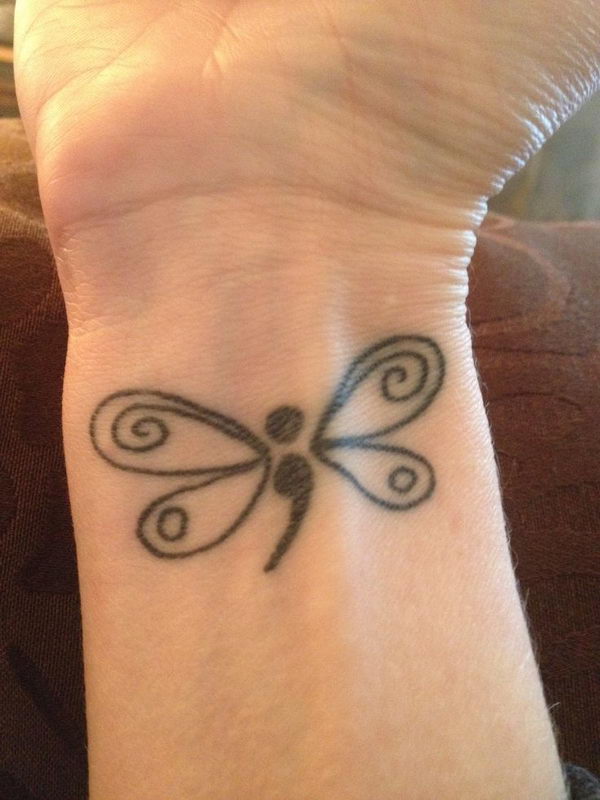
Punctuation's consistent rules are needed to provide a stable structure for a constantly evolving world, thus allowing man-kind to advance at a perpetual rate.
Although punctuation is often seen as inconvenient and even unnecessary, it is needed to bring order to a world filled with chaos. Some say that punctuation rules need to be updated, yet those people don't give specific changes that need to be made. Changes like the pilcrow and the hedera have indeed "enjoyed temporary places in common usage before fading from view" (Source A). Therefore, history itself has proven that the current rules are adequate. Also, like Ben Dolnick, many people have experienced first hand, how at first glance some punctuation seems unnecessary, but after further inspection the true beauty and "exquisite tension" (Source E) can be fully appreciated. Also, Dolnick's point that no literary advice should be "adopted mindlessly" (Source E) resonates with the idea that change should not be desired for the sake of change. Sure the ever-changing world inspires innovative ideas, but structural basics to human-kind like punctuation have no need to be altered. For if they are altered like the world is, society will no longer have a mutual basis to which they can express their ideas. Whether it's through the use of the comma that is the most "usable of all the stops" (Source D) or the semicolons that give off "a pleasant little feeling of expectancy" (Source D), today's punctuation helps express anything from a simple note to a friend to a world-changing idea. Therefore, through the consistent templates of punctuation, the world can continue to grow.

Although punctuation is often seen as inconvenient and even unnecessary, it is needed to bring order to a world filled with chaos. Some say that punctuation rules need to be updated, yet those people don't give specific changes that need to be made. Changes like the pilcrow and the hedera have indeed "enjoyed temporary places in common usage before fading from view" (Source A). Therefore, history itself has proven that the current rules are adequate. Also, like Ben Dolnick, many people have experienced first hand, how at first glance some punctuation seems unnecessary, but after further inspection the true beauty and "exquisite tension" (Source E) can be fully appreciated. Also, Dolnick's point that no literary advice should be "adopted mindlessly" (Source E) resonates with the idea that change should not be desired for the sake of change. Sure the ever-changing world inspires innovative ideas, but structural basics to human-kind like punctuation have no need to be altered. For if they are altered like the world is, society will no longer have a mutual basis to which they can express their ideas. Whether it's through the use of the comma that is the most "usable of all the stops" (Source D) or the semicolons that give off "a pleasant little feeling of expectancy" (Source D), today's punctuation helps express anything from a simple note to a friend to a world-changing idea. Therefore, through the consistent templates of punctuation, the world can continue to grow.
Sunday, November 9, 2014
Beauty and the Beast
"It was in a dark, wet place, its head covered with great O's of wool, the black face holding, like nickels, two clean black eyes, the flared nose, kissing-thick lips, and the living, breathing silk of black skin. No synthetic yellow bangs suspended over marble-blue eyes, no pinched nose and bowline mouth."(Morrison 190). Morrison uses vivid imagery to illustrate how innocent Pecola's baby is. The "synthetic yellow bangs" also reminded me of the phallic figured barbies, and how unnatural they looked. Although Pecola's child doesn't resemble those plastic, artificial figurines, it's considered ugly and even unnatural. This irony plus the fact that the innocent baby doesn't survive childbirth just further emphasizes how society's perspective of beauty is skewed. Although the idea of longing for "blue eyes" is constantly mentioned within the novel, Morrison ends the book with the idea that even if one obtains such beauty, it will not seem like it's enough. Once a person falls into the mentality of longing for something they're not, there's always the possibility of a more beautiful being. Therefore, by making the last chapter of the novel a conversation between Pecola and her imaginary friend, Morrison not only shows Pecola's true feelings, but she also uses these feelings to tell the reader that longing to be something you aren't is pointless. Since the "what if's" are infinite, it's better to accept yourself for who you are and if others can't appreciate that, then they're the ones with ugly hearts.


Sunday, November 2, 2014
What would you do?
Peer pressure is looked upon to be something bad. People often say "Don't fall into the peer pressure!" However, peer pressure is generally thought in a sense that people want you to do something. For example, they want you to eat that weird jelly bean you found on the ground or pick off that one hair dangling off of the bald guy in front of you's head. People fall into peer pressure just to avoid ridicule, or to just fit in. As I was reading The Bluest Eye, I came upon the following line: "Frieda agreed with me. 'Miss Forrester said he was incorrigival" (Morrison 67). Incorrigival isn't actually a real word. It's supposed to be spelled incorrigible. However, Toni Morrison specifically spells it wrong, because she uses this spelling mistake to further characterize Frieda. Frieda, the girl who previously had just stood up for Pecola, is depicted to be an innocent child. She's innocent in the sense that she has yet conformed to society, for one of the main messages of this story is conforming to white culture.When someone's being attacked by multiple people, the average person would simply walk by, for they might fear that if they joined in they would also be attacked. Most people conform so they're not different. They want to fit in to avoid ridicule. However, in no way does this thought ever come into Frieda's mind as she selflessly stands up for Pecola. Therefore, Frieda is seen as the innocent minded protector that has yet to conform to society's ideals, and Morrison emphasizes this innocence by misspelling the word incorrigival. Also, when I was reading this passage a TV show suddenly popped into my mind. It's called What Would You Do. This video is somewhat similar to the scenario of what happened to Pecola and Frieda.
Subscribe to:
Posts (Atom)